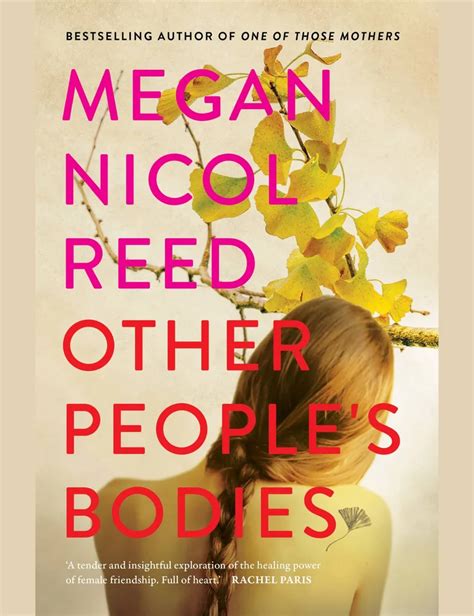
Megan Nicol Reid
Allen & Unwin
Otago Daily Times, May 9th 2026
At the height of the pandemic it seemed the public engagement with science and the compassionate solidarity people exhibited during early lockdown might be sustained once ‘normal’ life resumed. Instead, we have seen a rejection of collectivist social policies and conventional medicine that populists and influencers have exploited and amplified to divide families and communities. In Other People’s Bodies former Sunday Star Times and NZ Herald columnist Mandy Nicol Reed explores the ‘wellness-to-alt-right’ pipeline that contributes to this polarisation, and how readily competent, intelligent people’s needs and insecurities can be exploited for personal gain.
On the face of it, the five women who attend Lars Heikkinen’s bi-weekly sessions at First Tree gym have little in common. But the classes’ intimate setting and shared goals have fostered friendship, despite the participants’ differences in age, stage and station.
Their group feels even more exclusive when Lars allows them to test a new, holistic programme he is developing. Divided into 7 weeks, one devoted to each of the cardinal sins, their physical training is supplemented by yoga and spiritual practice (a mishmash ranging from Finnish ice-bathing to a Mayan cacao ceremony). And each week one of the women is chosen for a one-on-one appointment to help them address the unique barriers they must overcome to reach “enlightenment, good health, [and] equilibrium.” It is an alluring offer that makes them feel seen in a way that inspires belief and devotion – and allows Lars (for a profit) to reshape their minds and bodies to match his own masculinist ideals. The harm this causes may result from his unshakable self-belief rather than deliberate ill-intent, but it is significant, and only the behind-the-scenes intervention of his wife Priya prevents tragedy.
The novel’s impact is heightened by its narrative structure. Events are presented from the perspective of the most vulnerable of Lars’ targets, giving insight into their slipping self-perception: Min, a lawyer with a disintegrating marriage follows his advice to tap into her feminine side by exploring tradwife subculture; Kat, an loner artist whose mantra is ‘the inside is on the outside’, interprets his instruction not to feed her inner emptiness literally as well as figuratively; and Sally, a young mother who trusts Lars to ‘treat’ not just herself but also her daughter.
Their accounts are supplemented by passages from Priya that reveal the impact of Lars’ toxic beliefs on his own family. These brief interjections mirror her position on the sidelines of the marriage, in which she protects herself by passive resistance, but leave her role as Lars’ enabler ambiguous.
Verity and Flick, the other two members of the fitness group, are rather less enamoured with the programme, and their thoughts remain closed to us, accentuating the growing distance between themselves and their friends.
Powerfully and compassionately written, Other People’s Bodies is a reminder that ‘Wellness’ can be a tool for both empowerment and coercion, and a warning of how blurred the line between the two can be.