Louise Milligan
Allen & Unwin
Otago Daily Times, June 6th 2026
Inspired by her work the effects of PTSD on serving police officers, investigative journalist Louise Milligan’s debut novel, Pheasants Nest, centres around the rape and kidnapping of a Melbourne-based reporter, Kate Delaney, and its impact on both her and the detective in charge of the case. In Shelleybanks she picks up Kate’s story, this time as a frame to explore abuses against women by the Catholic Church in 1970s Ireland.
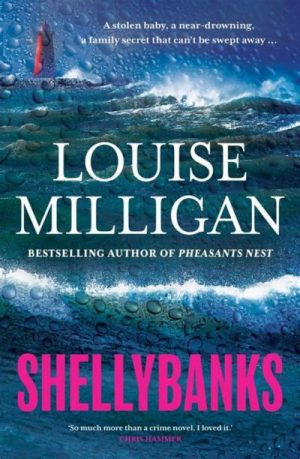
The novel, which set shortly after its predecessor’s end, opens with Irish-born Kate, who is still highly traumatised, learning that her aunt Dolores’ fiancée, Kevin, is dying. Arriving in Dublin to find Kevin gone and Dolores stunned with grief, she assumes that her aunt’s extreme distress reflects the suddenness of her loss. But after Dolores attempts to drown herself in Shelleybanks beach, where Kate herself was once nearly swept away by the treacherous tides, she discovers Kevin’s death has reopened older, deeper wounds. In response to Kate’s probing, Dolores explains that when she was fifteen, her mother enrolled her in a cookery school (ostensibly to improve her employment and marriage prospects but really, Dolores suspects, to get rid of her).
This seemingly reputable establishment, run by an organisation connected to the Catholic Church, is in fact the recruiting ground for a religious sect known as The Group, and Dolores was singled out for ‘special attention.’ Subjected to concerted love-bombing, Dolores joined the order, where she is soon isolated, enslaved and subject to physical, psychological and sexual abuse. But it is only after they stole her newborn baby (conceived consensually and very much wanted), that she was finally able to escape, leaving her daughter behind.
Reporterly instincts galvanised, Kate is determined to seek justice for her aunt and persuades Dolores to go to the police, working alongside them to find her long-lost cousin. The investigation, which Kate finds both triggering and cathartic, reveals that The Group remains active to this day.
Although fictional (and in parts implausible – what newspaper gives a reporter open-ended paid leave?), Dolores’ story is based on those of Milligan’s own aunts and other Irish women she met while reporting for Four Corners, and she describes the bookas being “about my family and my heart.” It is also coloured by her own memories of childhood visits to Shellybanks and a recurring nightmare of being caught by its tides, which she describes as a metaphor for being caught in the undertow of great trauma.
Given the obvious importance of the novel to its author, I wish I had liked it more, but ultimately I found Kate’s narrative distracted from rather than added to story. Although I can understand Milligan’s desire to contrast the experiences of two generations of Irish women, and her reluctance to step away from a character into whom she projects many elements of herself, I think Dolores’ narrative would have greater impact if left to stand alone. That said, I have not read Pheasants Nest. For new readers, it might be a better place to start.