Michael Jackson
Ugly Hill Press
Otago Daily Times, March 7th 2026
New Zealand born author Michael Jackson’s bibliography is extensive and diverse. In addition to his internationally acclaimed academic writing on existential anthropology, he is an award-winning poet, memoirist and creative writer. The Oxford Companion to New Zealand Literature describes his work, which draws on his years living and working with indigenous communities in Aotearoa, Australia and West Africa, as “blurring the distinctions between formal academic study and more creative and philosophical writing.”
This cross-disciplinary approach is evident in his new short story collection, Outliers, whichaddresses the way in which people’s lives are shaped by the interplay between free will and the constraints of personal and sociocultural history. As the title suggests, these stories trace the lives of individuals who, by choice or circumstance, live on the margins of mainstream society. Each named after a defining characteristic of their focal character – ‘The Gardener’, ‘The Survivor’, ‘The Bystander’ – they are quiet and observational tales, ranging in form from snapshots in time to reflections on the arc of a life that can only be fully understood in retrospect. As the subject of the collection’s opening story, the ‘Confidence Man’, puts it: “our fates are penned in invisible ink…it is only after the fact that we become aware of the hidden watermarks imprinted in the paper on which the contours of our lives have been pencilled in.”
While each story is unique, they are linked by common themes such as the influence of family relationships (many negative), loss, and struggles with physical or psychological health. They are also beautifully observed character studies in that feel fully rounded and emotionally true, regardless of whether they are presented in seven pages or forty-eight,
As fascinating as these stories are, I was just as interested in the narrative ‘I’. Although all but one of these stories is fictional, six of the eight are told in the first person by storytellers who, although different, share characteristics with one another and with Jackson himself. Students and academics, writers, anthropologists, and social workers, each is in their own way an also outsider. Although some learn about themselves through the telling, most observe their subjects from the periphery with a degree of professional detachment (the one exception is ‘The Swami’, in which the narrator is himself is a significant participant). This blurring of the line between fact and fiction adds to the complexity; inviting us to speculate what is drawn from reality and what from imagination and leaving plenty of scope to make personally meaningful associations and connections between their lives and our own.
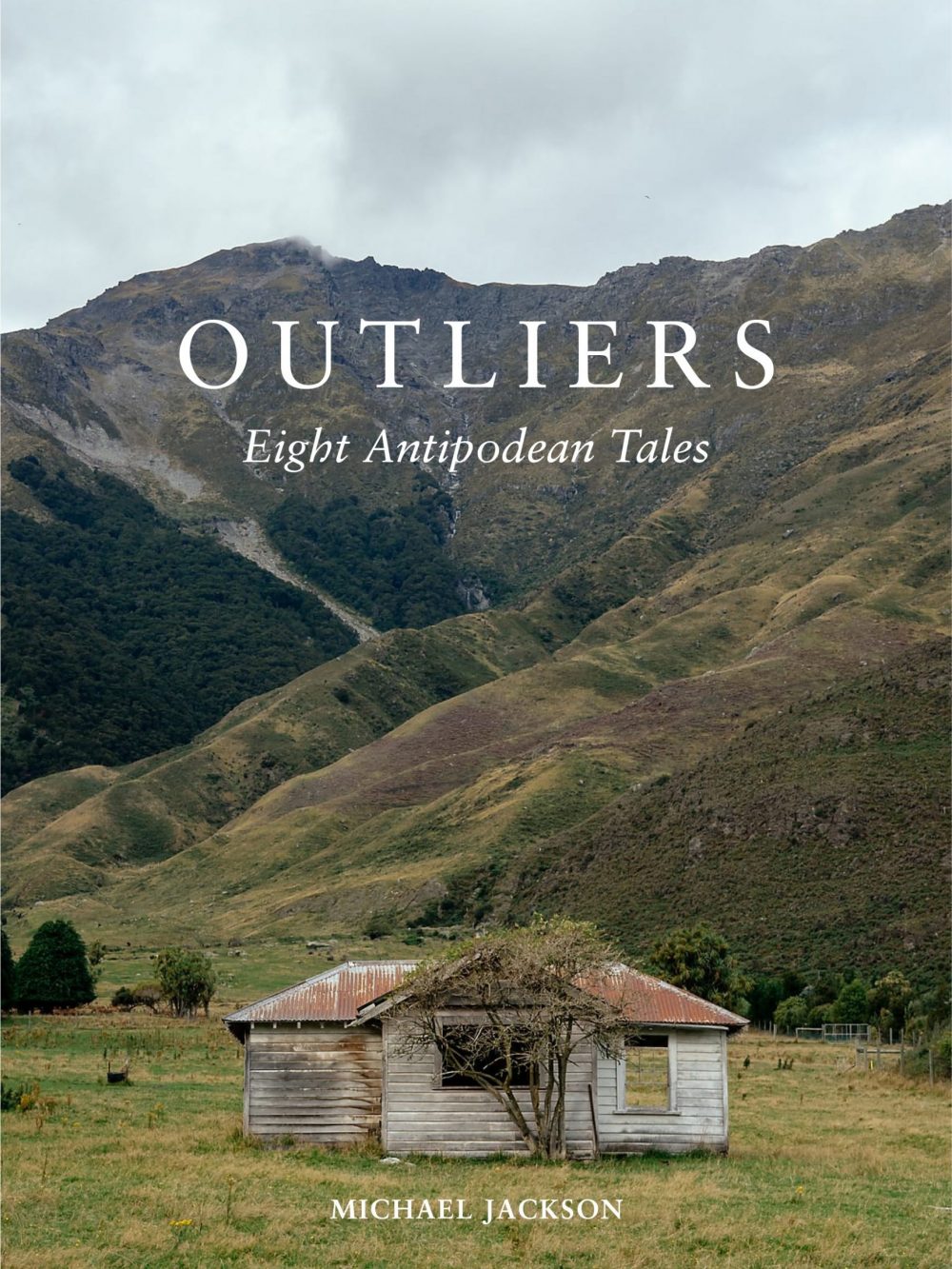
I also enjoyed the fact that many of these stories are set in and around Wellington. although New Zealand authors no longer feel the need to ‘universalise’ their settings, I still feel a frisson every time I recognise an Antipodean landscape in print. This association extends to the picture that graces the cover: austere, richly textured, and beautiful, it perfectly encapsulates the collection as a whole.