Lucy O’Hagan
Massey University Press
Otago Daily Times, November 22nd 2025
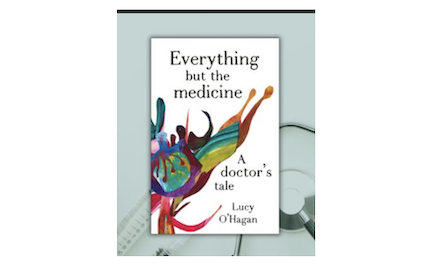
A combination of memoir and critical analysis of our current healthcare system, Lucy O’Hagan’s reflections on her life as a rural GP could as readily be titled “But everything is the medicine.”
The book, which originates from a monthly column in New Zealand Doctor Rata Aotearoa, is an eclectic mix of vignettes, character sketches, poems, listicles and essays organised into four sections: Patient, System, Doctor, and Story. And, as is fitting for a narrative informed by relational values, begins by introducing O’Hagan herself. Rather than set herself apart from her patients, she sits alongside them – a daughter at a parent’s deathbed, a sister grieving a lost sibling; a mother at child’s medical appointment. Interspersed with these personal reflections are brief, immersive vignettes and verses drawn from clinical practice, all of which have shaped her understanding of herself and her craft. These beautifully written pieces deal with difficult issues including suicide and domestic violence, and are intense and deeply moving, revealing the messy complexity of lives that cannot be diagnosed and treated in a prescribed and check-listed 15-minute consultation. Identifying the cause of dis-ease takes time, and ‘treatment’ ranges from helping patients access social services, to helping them recognise their own capacity to survive the crisis and regain agency over their lives.
These also stories introduce themes that recur throughout the book, including the importance of whakawhanaungatanga (relationship building), of acknowledging and centring a patient’s story, and of providing a space within which people can make their own meaning of their experiences: “When patients bring their bodies to their GPs, they also bring their minds and lives and souls…we cannot do the medicine well .. without relationship..and that happens when we respond to the patient’s life, not just their body”.
It is a process that can be as transformative for doctor as patient, since by becoming “a person who is prepared to see the suffering in others….we meet our own monsters and mentors and challenges”, but one that can carry a severe toll, and O’Hagan brings the same emotional honesty to the essays of the book’s second half as the case studies of the first. Among other things, these describe burn-out so severe she had to step away from medicine, with profound impacts on her identity and place in the community. It is a brave thing to do given doctors’ traditional reluctance to admit distress, and she hopes it will encourage others to speak about their own struggles and challenge the shame arising from “the internalised standard of how to be a good doctor”.
An important aspect of her recovery was joining a hauora Māori practice and immersing herself in te ao Māori. Experiencing the connections binding people to one another through mauri (life force) and wairua (spirit), and the physical and non-physical world has taught her that nobody is truly alone.
Everything but the Medicine provides the template for a medical system in which we work together for the benefit of all. It is an inspiring and (I hope) achievable vision.