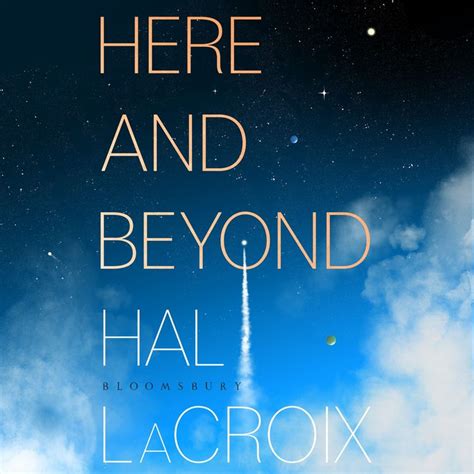
Hal LaCroix
Bloomsbury
Otago Daily Times, April 11th 2026
Generation ships were first proposed in 1918 by Robert Goddard, the engineer who built the world’s first liquid-fueled rocket, as a way humanity might one day to travel to the stars, and have been a popular theme in science fiction since the 1930s. As such, it is testament to journalist Hal LaCroix’s talent that his debut novel holds its own against the works of such respected authors as Arthur C. Clarke and Elizabeth Bear; a reminder of the creativity and resilience of humanity at a time when hope is in short supply.
A mere 210m long and 165m in diameter, Shipworld is small by the standards of the genre. But the 600 Pioneers she carries are convinced their mission to colonise HD-40307g, a (presumably) habitable planet forty-two light from the dying Earth represents the final hope for humanity’s survival, and for the first third of their 360-year, 7-generation voyage, during which time the ship’s population includes people who still remember their former home, it is a unifying vision. But for the central three generations, too young to have lived on Earth, too old to make planetfall, the idea of sacrificing themselves for the sake of their ancestors and descendants requires an of faith that is difficult to sustain.
This disconnection from the past is amplified by the fact that in order to avoid replicating the “techno-enhanced narcissism” that destroyed Earth, the only cultural artefacts Shipworld carries with reflect the individual narcissism of the billionaire philanthropist who designed and funded their mission: a musical playlist ranging from “My Blue Heaven” to “A Horse with No Name”; a library of books on minor sports and salesmanship, and a handful of other objects that acquire a meaning independent of their origins.
It is perhaps not surprising, therefore, that the first major crisis originates with a young 3rd-Generation citizen Brenz Oort-St George. Chafing against the idea that survival and stability are the only metrics worth measuring, Brenz publicly proclaims the right to live his own life and unilaterally alters the ship’s trajectory to investigate a nearby rogue world. The subsequent insurrection sparked by this defiance is only the first of a series of challenges Shipworld’s inhabitants must navigate. And the solutions, be they evolutionary or revolutionary, must balance social and physical sustainability with innovation and change, all while remaining true to the original mission.
The inherent fragility of a closed system in which the smallest misstep could lead to disaster and the trade-offs associated with every decision are visible could be played with dramatic theatricality . But rather than relying on spectacle to carry the plot, the novel’s most momentous events occur off-stage, and its ending leaves much that is unresolved. LaCroix chooses instead to focus on the philosophical, psychological and cultural evolution of his pocket world presented by an ensemble cast that spans the generations, each of whom must find their own answer to the question “Who are we, on Shipworld?” It is an approach that trusts in the imagination of the reader, and one I find much more satisfying that the sugar-rush of an all-action blockbuster.