Laura Barrowdale
Tender Press
Otago Daily Times, January 24th 2026
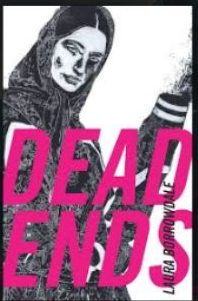
I am not, by inclination, a short story reader. This is in part because I enjoy the extended immersive experience proffered by a good novel, but mainly because of my inadequacy as a reader; the compact nature of the form demands an emotional and intellectual engagement of which I seldom feel capable. Thus, is it a testament to Christchurch writer (and ODT reviewer) Laura Borrowdale’s talent that I thoroughly enjoyed her sophomore collection, Dead Ends.
Despite the stories having been written and published individually over the course of 15 years, the collection is satisfyingly cohesive, linked by recurring themes and an aesthetic register that shades from the eldritch to the gothic: Women paying the price for social transgressions by mortification of the flesh; parental conflicts interpreted through the lens of childhood; shadows of imagination manifesting in the real world. Borrowdale is particularly adept at capturing the existential terrors of parenthood (I almost stopped reading after the opening story, which tapped directly into my worst nightmares), and even the most innocuous-seeming tale has an undercurrent of the unease.
This may sound unremittingly bleak, and I would certainly recommend pausing for breath between stories in order to reorientate oneself in the mundane world, but there is something cathartic about voluntarily immersing oneself in the uncanny, and the darkness is leavened by moments of whimsy and dark humour. In ‘Smoke and Marbles’, for example, a teenage girl accidentally castrates a Greek statue, inadvertently creating the perfect Instagrammable come-back to a shitty boyfriend. And in ‘Guilt Trip’, a woman, tired of being haunted by the censorious ghost of her mother, returns it to its rightful owner (oh that it was so easy to shed that generationally-transmitted baggage!).
It is hard to pick favourites from such a rich selection, but two stories, ‘The Slinky’ and ‘Sit Still’ particularly stood out. The first, told from child’s perspective, recounts them watching their mother skinning a slink and clothing another, orphaned lamb in the hide so it will be fostered by the bereaved ewe (an action echoed in the donning and doffing of by her own children’s winter coats). Borrowdale’s physical descriptions are so vivid that I was transported to the kitchen where the rescued lambs are fed, “jaw upright with one hand, a finger down the side of its mouth” and held “weightless, legs dangling, the hooves knocking together” , and to the snowy paddock, where the would-be foster mother paces making “a long, low bleat that lasted and lasted and began again.” The second asks us to consider how, in a world inundated in AI content, a human artist can differentiate their work from algorithmically-generated slop. The answer is not only logical in the story’s slantwise world, it speaks a metaphorical truth that is deeply disturbing.
Over the years I have become very selective about which books I choose to incorporate into my library. Literally and figuratively haunting in all the best ways, Dead Ends is a keeper.