Ingrid Horrocks
Te Herenga Waka University Press
Otago Daily Times, December 13th 2025
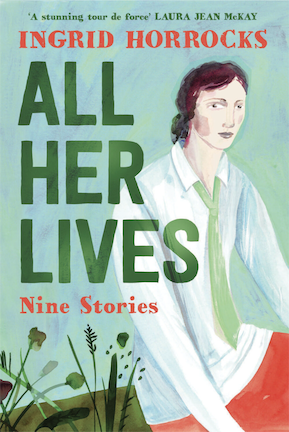
The nine short-stories in Ingrid Horrocks latest compilation beautiful capture the changing shape of women’s lives and identities across time from 1795 to today. From the nurse trying to reintegrate herself into her rural New Zealand family after returning from WWII to the solo mother contending with the micro-aggressions of sanctimonious neighbours, or the university student in Berlin discovering she is not as comfortable with an open relationship as she supposed, their portraits reveal the many ways things have (and have not) changed across generations.
Organisationally and thematically, the collection pivots around the book’s central story, The Silver Ship. Informed by Horrocks’ own scholarship, it describes Mary Wollstonecroft’s reaction to having her dreams of founding a community in which women to “[have] their own equality and liberty, and right to reason, written into law” extinguished by the closed ranks of a patriarchy that refuses to acknowledge her agency. Rejecting the story of herself as a mistress abandoned with her illegitimate child she is determined to “present no such opportunities for pity…she would be the hero of her own tale”. And, like Mary, each of Horrocks’ women manages, through acts of defiance large or small, to find self-definition and meaning within their own lives.
Despite their diversity of setting and circumstance, the stories are are linked in subtle and understated ways each connection a small but pleasurable reward for the observant reader: a secondary character in one story is focus of another, ties of place, blood or marriage are revealed through a passing comment or reference in another,
Another point of commonality is the way female identity is defined and constrained by biology, society and, on many instances, motherhood. Wollstonecroft’s firm belief that “a mother should touch and hold her child” and her refusal to employ a wet-nurse despite being “thought peculiar for suckling her baby herself” stands in stark contrast to Truby King’s view, explored in Marvellous Instruments, that women, “densely ignorant of the duties of maternity, treating babies little better than malnourished calves” must be “observed, organised and instructed” by men such as himself. Mia’s world in Concrete Box has contracted to “paddled milk and soaked Weetbix mush”, interspersed with moments of calm in which her daughter is attached to her, her son “in a pouch like a baby wallaby, his head furry, all of us flown somewhere else.” Meanwhile in Murmuration, Madeline must come to terms with the fact that, although she felt like “a god when he was born…a maker of men,” as an adult he has forged his own path and it is up to her whether she joins him. Even those without children are not immune; Eileen’s anger at her boyfriend’s dalliances in Woman’s Choice Night is heightened, for example, by the fact the other woman has a baby.
Although some may find it disheartening that childbearing remains so central to our identity as women, the possibility of making the world better for future generations makes the fight worthwhile. And therein lies the hope that make All Her Lives a joy to read.