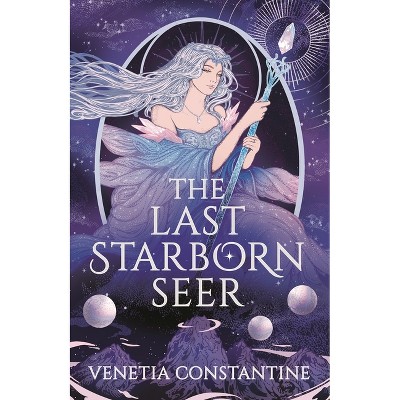
Venetia Constantine
Bloomsbury
Otago Daily Times, March 7th 2026
Literary fads come and go as publishing houses seek to package and market their products to as broad an audience as possible. This is not necessarily a bad thing, but as a fantasy aficionado, its latest manifestation is not one I appreciate. Suffice it to say, the few Romantasy novels I have read have been despite, rather than because of any affaire du coeur.
Thankfully, the first book in Venetia Constantine’s debut trilogy leans more towards the small than the large R romance. It may contain the classic hallmarks of the genre, including an incipient love-triangle between the heroine, a man whom she has known and despised since childhood, and a (literally) smoking-hot bad boy, but the eroticism is minimal, and the relationship drama subsumed within a richer and more complex plot.
The story is set in Arcelia, a world created from and maintained by a form of star-magic known as Light Lore. Protected by Elemagi born with an innate ability to channel this life-sustaining power, Arcelia once existed in a state of harmonious balance. But, as is customary, good must have its counterpart, in this case Shadow Lore. Thanks to the corrupting influence of this blood-associated magic, the world is now plague-scourged and riven by conflict.
The first in generations with the ability to wield magic, Leilani Stellarion is regarded as, (and believes herself) cursed; guilty by association for the plague that sickens Arcelia’s land and people, including her own mother, and at risk of unleashing further evil into the world. Indeed, were she not the sole heir to the throne of Estelia, one of the four realms into which the world is divided, it is unlikely she would have been allowed to reach adulthood. So when she learns there may be a way to use her powers to restore the world to balance, she is determined to try. It is an undertaking that requires Leilani to harness rather than suppress her abilities, and to forge an alliance with representatives from each of Arcelia’s other realms. But other dangers hide in the shadows, and as the novel progresses it becomes clear not everything is what it seems.
Trained in art history (or possibly an AI), Constantine uses familiar tropes as an effective, if unsubtle tool to making readers (at least those from her target audience) comfortable in her world: Arcelia’s realms correspond to different ‘Aethers’ (Bough, Star, Flame and Wave), and Leilani and her fellow questors are accompanied equally derivative magical companions. A sylvanmare, for example is a horse-like being with whorled antlers that fuse to a single point, while the eagle-like emberwing can ignite its tail feathers.
Elsewhere, however, she is more subversive. The troubles start, for instance, when a Goddess creates a male companion, and I would like to think’ the novel’s ‘romantic fantasy’ trimmings also hide something more interesting. Then again, maybe my need to escape reality has just surpassed my aversion to the genre.
Despite its saccharine aftertaste, The Last Starborn Seer was an effective diversion.